



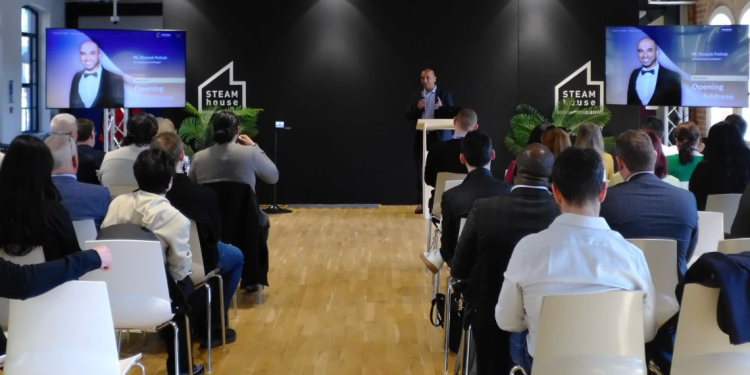
Five winners emerged from 21 finalists to secure eight patents, gaining a potentially powerful competitive edge as AI erodes traditional advantages in the technology industry.
Five UK startups have won the rights to patented technologies developed by some of the world’s largest corporations, a prize that could transform their ability to compete at home and internationally.
The five winners of IPHatch UK 2026 have secured eight patents originating from Panasonic, Nokia, NEC and DENSO, giving them access to innovations that would ordinarily be far beyond the reach of young businesses.
The achievement follows a highly competitive selection process for the fourth annual UK competition. Twenty-one startups were shortlisted for the final pitch day at City of Glasgow College, and five were selected.
The patents are only part of the prize. Winners also gain a direct relationship with the corporations behind the technology, a partnership most startups could only dream of, which could open doors to future collaboration, investment and international markets.
The five successful companies are:
- CALMS International (West Midlands), an enterprise software company, awarded an NEC patent
- Cyber Nandhini (Aberdeen), a cybersecurity business, awarded a Nokia patent
- The Discourse AI (Suffolk), an education technology and AI company, awarded two Panasonic patents
- Mixd Reality (Staffordshire), an augmented reality and education technology company, awarded a Panasonic patent
- RS9 Technologies (West Midlands), a cybersecurity and AI business, awarded three DENSO patents
As AI accelerates, patents could become an even bigger competitive advantage
Artificial intelligence is rapidly cutting the time and cost of building software, making it harder for businesses to rely on their technology alone to stay ahead of competitors.
Building on an existing, granted patent can reduce R&D time and cost for a startup, and give it patented technology developed by a global corporation.
For major corporations, the model puts valuable but underused patents to work through ambitious startups, rather than leaving them sitting in corporate portfolios. For smaller businesses, it offers a rare chance to build on years of corporate research and development, strengthening their technology, competitive position and potential for international growth.
Bringing the world’s biggest companies closer to British entrepreneurs
Deepak Pathak, European Ambassador for Piece Future / IPHatch, said:
“Britain has some extraordinary entrepreneurs, but imagine what more they could achieve if we connected them directly with the technology, expertise and resources of the world’s largest companies.
“That’s what we’re doing through IPHatch. We’re opening doors that would ordinarily be closed to smaller businesses, giving them valuable technology, stronger protection against competition and opportunities for future partnerships with global giants.
“My ambition is to bring more of these international opportunities to Britain, connecting major corporations with our entrepreneurs, universities and investors.
“Britain shouldn’t just be somewhere global companies come to sell their products. It should be somewhere they come to find their next great business partners.
“As a Brit, I want our companies to have an edge. These five companies have earned a fantastic opportunity and we will be supporting their next steps. But this is the start. I want to see dozens of UK companies winning patents next year, and hundreds over the next few years, building UK success stories that become global brands.”
The programme is also attracting international entrepreneurs to Britain. One of the five winners, CALMS International, originally from Malaysia, set up its UK presence through the Department for Business and Trade’s Global Entrepreneur Programme.
More than 350 patents commercialised worldwide
The UK winners join an international programme with a substantial track record. Operated by Piece Future, IPHatch has commercialised more than 350 patents and welcomed more than 100 startups through 14 competitions across 12 markets, connecting entrepreneurs with technologies developed by multinational corporations.